Alkaline feeding and muscle gain
Most of the food
we eat has an acidifying effect on our body
and this is a negative effect. We start with drinks, soft drinks, alcohol, pastries , refined wheat in all kinds of breads, sandwiches, pasta and rice, and especially meats, especially red meats . In addition to our sport that is bodybuilding , we eat a lot of meat and protein, most acidifying foods and this hinders the absorption of nutrients.
Initially it is convenient to explain what acidity and alkalinity mean. These two terms respond to the way of classifying the reaction of any element. The degree of acidity or alkalinity is measured through a scale called pH (hydrogen potential) that goes from O (extreme acid) to 14 (extreme alkaline), with the neutral value being located in the center (7). So between 0 and 7 we have the acidity values and from 7 to 14 the alkalinity.
All the nutrients in our diet have different degrees of acidity or alkalinity. Pure water, which is neutral, has a pH 7.07. Basically, all fruits and vegetables are alkalizing.
Minerals also play an important role in the acidifying or alkalizing behavior of foods and allow us to make a more conscious choice.
Foods that have a high content of sulfur, phosphorus and chlorine are generally acidifying.
On the other hand, those that contain a good dose of: calcium, magnesium, sodium and potassium are alkalinizers. The food we consume is transformed into acidic waste and the importance of expelling it in due time is extremely important. Acidic blood coagulates faster and causes the veins to become blocked. Over-acidity interferes with life itself, it is mainly responsible for all diseases, including heart attacks, premature aging and obesity. Functioning
Our cells are slightly acidic but are surrounded by an alkaline fluid. Polarity is essential in chemistry or for energy exchange but this is made difficult by acidity. This is one of the reasons why people lose their energy.
Acidic pH interferes with mineral absorption, so calcium absorption will be inefficient. Excess acidity weakens all of our systems and forces the body to obtain minerals not received from vital organs and bones, trying to neutralize acidity.
The body creates cholesterol (fatty deposits) to protect the deadly build-up of acidic wastes from the vital organs such as the liver, heart and kidneys. Obesity is a problem of acidic systems, since in these cases, fat saves our lives. Dr. Robert Young explains.
Ordinary or distilled water is neutral (pH 7), sugary drinks like cola are acidic (pH 2.5).
Therefore our cells that make up our body, need to feed, eliminate waste and constantly renew. In this sense, blood fulfills two vital functions:
- Bring to all cells the nutritious materials they need
- Remove from them the toxic and acidic residues that are produced as a result of the transformation of said nutrients (metabolism).
At the cellular level, a kind of internal combustion occurs, since body heat is released. The residues that originate in this combustion process are acidic in nature and must be evacuated from the body through the natural elimination routes (kidneys, intestines, skin and lungs).
To adequately accomplish this task, the blood must maintain a slight level of alkalinity. In a healthy person, the pH of the blood (lymph, cerebrospinal fluid, etc.) is between 7.40 and 7.45. When the acidity level is increased, due to certain mechanisms of self-regulation, the blood manages to preserve this vital balance. It does this through the contribution of bases (alkalis) that neutralize acids. Therefore, in order to obtain a healthy cellular metabolism, it is necessary that together with oxygen, the blood has a constant flow of substances of an alkaline nature, in order to be able to neutralize the acids.
In the first instance, the blood obtains these bases from food. In case of further need -be it due to excess acids or nutritional deficiencies of bases- you can resort to the alkaline reserve of bones, teeth, tissues. In this way the blood becomes a “thief” of the organic structure, with the sole objective of restoring the vital acid-base balance. This is how the decalcification and demineralization mechanism starts up. These mechanisms lead to bone wear, joint degeneration, weak hair, mucosal lesions, respiratory tract conditions.
From this it follows that we must be careful in the contribution of alkalinizers that we make to our body through the food we eat, trying to avoid acidifying foods and situations. A long time with the acidic body is the same as corrosion, this would corrode the tissues, veins and arteries. When the pH becomes acidic, there is oxygen deficiency, which causes harmful anaerobic microforms, the formation of germs, fungi and viruses, to be created.
Nutrition
It is important to know aspects that have to do with the preparation of meals. For example: it has been shown that 40-60% of the mineral elements and 95% of the vitamins and bases are lost in the cooking water of vegetables. It turns out then that the high content of bases that vegetables have and which is so useful for blood balance, is devalued.
Hence the importance of the oriental system of steaming vegetables in steel or bamboo baskets, that is, without direct contact with water. We also understand the high therapeutic value of the broths, which preserve all the alkaline content of the vegetables and which are so balanced in patients and convalescents.
In general, cereals generate more acid waste in wheat and corn and less in barley, quinoa. For its part, legumes and seeds are slightly acidifying due to their protein content, but with varieties.
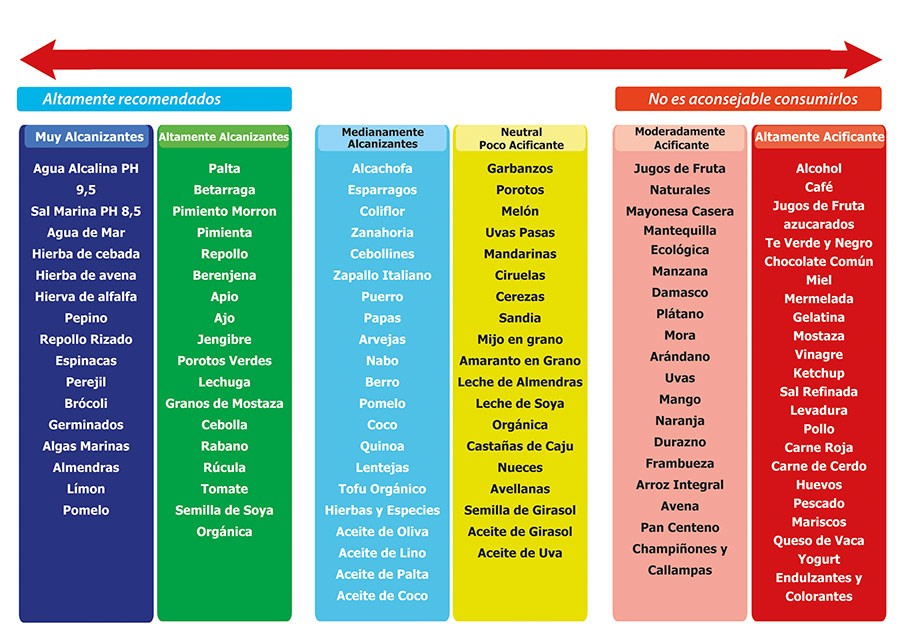
Dairy products are acidifying elements, fresh unpasteurized milk is somewhat more alkaline. Certain qualities of food are lost in the cooking water, hence the importance of steam cooking. That is why the nutritional value of the broths that preserve all the alkaline content of the vegetables and that are so balancing in sick and convalescent is important. Alkalizing and Acifying Food Table
1 The psychic state.
Sadness, hyper-emotionality, tendency to depression, nervousness, irritability.
2 The head.
Headaches, conjunctivitis, paleness.
3 The mouth.
Acid saliva, inflamed and sensitive gums, high irritation of the tonsils and pharyngitis that leads to repetitive infections of the mucosa.
4 teeth.
Caries and cracked or brittle teeth.
Teeth sensitivity to contact with cold, hot or acidic foods.
5 The stomach.
Heartburn, acid burps, spasms, stomach pains, gastritis and even ulcers.
6 The intestines.
Burning in the rectum, predisposition to intestinal inflammation and discoloration of the bundles due to exhaustion.
7 Kidneys and gallbladder.
Acidic urine, irritation and burning in the bladder and urethra. Kidney and bladder stones.
8 The respiratory tract.
Sensitivity of the respiratory tract to cold, frequent colds, bronchitis, sinusitis, angina, hypertrophy of the tonsils, safe and legal, tendency to allergies, cough and a harsh throat due to irritation.
9 The skin.
Acid sweat, dry skin and irritations.
Cracks between the fingers and around the nails, fungal infections, pimples, various eczemas.
10 The nails.
Fingernails thin, split and break easily.
Stretch marks and white spots.
11 The muscles.
Cramps and spasms, tendency to tetany, lumbago and torticollis.
12 The articular bone system.
Demineralization of the bones: osteoporosis, osteomalacia and rickets.
Fractures and slow in their consolidation. Crackling of the joints, blockage of the vertebrae, rheumatism, arthrosis, arthritis, sciatica and herniated disc.
Migratory joint pain.
13 The circulatory system.
Hypotension, poor circulation, extreme sensitivity to cold. Tendency to anemia and bleeding. Chilblains.
14 The endocrine glands.
Exhaustion and hypofunctioning of the glands in general, except the thyroid, which has a tendency to accelerate.
The genitals.
Inflammation of the genital tract by acids. They favor infections.
16 The nervous system.
Excessive sensitivity to pain in general, insomnia.
Food classification
Conclusion
As our diet is quite acidifying due to protein consumption, we must try to alkalinize with other foods and vegetables. The best alkalinizer there is is baking soda, this taken when we get up on an empty stomach with the juice of half a lemon is excellent. Other supplements that can help us are coral calcium , acetylcysteine and Total PH Total
bodybuilding control : Eduardo Dominguez
 10 rules of Steve Reeves: size, strength and health